Puri’s Rath Yatra: When the Lord of the Universe Embarks on His Divine Journey
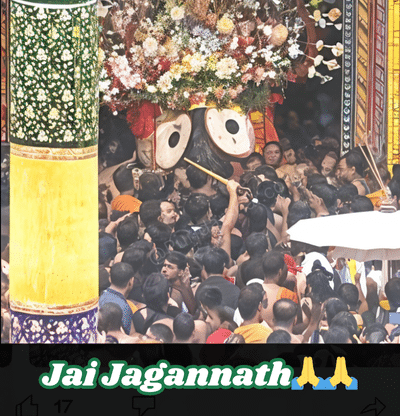
Puri, one of Hinduism’s four sacred Dhams, is where ancient legends breathe life into modern devotion. Every summer, this coastal gem in Odisha, India, transforms as Lord Jagannath (the Lord of the Universe) journeys with his siblings—Balabhadra and Subhadra—on three colossal chariots. This year is extraordinary: after 19 years, the Nabakalebara ritual unfolds, where the deities shed their old forms and embrace new divine bodies.
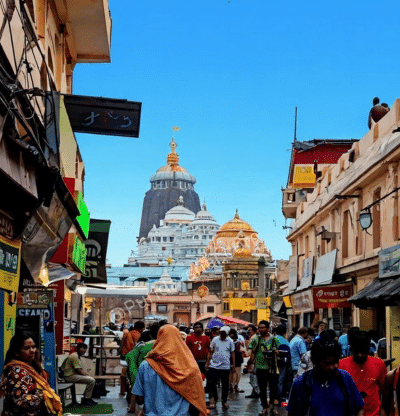
The city, usually home to 200,000, swells to over a million pilgrims, creating one of Earth’s largest religious spectacles. A riot of colors, rhythmic chants, and centuries-old traditions merge into an unforgettable experience.
The Sacred Trinity and Puri’s Divine Legacy
Puri, or Shri Purushottam Dham, is Lord Vishnu’s abode. Hindus revere the holy trinity:
- Brahma (Creator)
- Shiva (Destroyer)
- Vishnu (Preserver)
Here, Vishnu is worshipped as Jagannath—a unique, wooden deity alongside his siblings. The Char Dham (four holy sites) include:
Puri (East) – Jagannath’s realm
Rameshwaram (South) – Shiva’s domain
Dwarka (West) – Krishna’s kingdom
Badrinath (North) – Vishnu’s sanctuary
Millions embark on this pilgrimage, seeking moksha (liberation). But Puri’s Rath Yatra stands apart—a festival where God himself becomes a pilgrim.
The Grand Rath Yatra: A Divine Procession
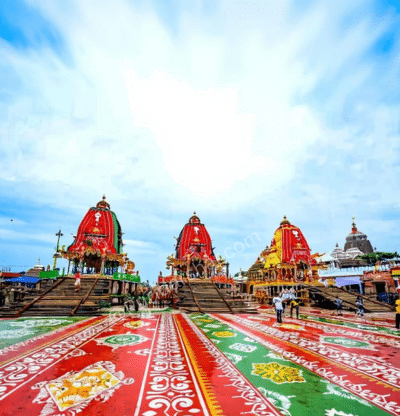
For nine days, the deities travel 3 km from Jagannath Temple to Gundicha Temple in towering chariots:
Nandighosa (Jagannath’s chariot): 45 ft, 16 wheels
Taladhwaja (Balabhadra’s chariot): 44 ft, 14 wheels
Darpadalana (Subhadra’s chariot): 43 ft, 12 wheels
Crafting the Chariots: A Timeless Art
No blueprints: Knowledge passes orally through generations.
Hand-measured wood: Precision within 0.5–1 inch.
42 wheels total, carved for smooth divinity.
Three teams labor day and night under Odisha’s scorching sun.
Mythical Origins of Rath Yatra: Legends & Spiritual Significance
Lorem ipsum dolor sit amet, consectetur adipiscing elit. Ut elit tellus, luctus nec ullamcorper mattis, pulvinar dapibus leo.
The Rath Yatra festival holds deep spiritual meaning, rooted in ancient legends that reflect the cultural and religious beliefs of Odisha. Here are some of the most fascinating mythological stories behind Rath Yatra:
1. Krishna & Balaram’s Journey to Mathura
To eliminate Lord Krishna and Balaram, their evil uncle Kansa sent a chariot (rath) to bring them to Mathura. When Krishna and Balaram embarked on this journey, devotees celebrated their departure—a moment now commemorated as Rath Yatra.
2. Victory Over Kansa & Divine Darshan
After defeating Kansa, Lord Krishna gave darshan to his devotees in Mathura while riding a chariot with Balaram. This joyous occasion is celebrated as part of Jagannath Rath Yatra traditions.
3. Krishna’s Chariot Ride with Subhadra in Dwarka
Another legend says that Lord Krishna once took his sister Subhadra and brother Balaram on a chariot ride across Dwarka to showcase the city’s grandeur. This divine outing inspired the annual Rath Yatra in Puri.
4. Narada’s Blessing: The Eternal Trio
When Rohini (Balaram’s mother) narrated Krishna’s divine pastimes (leelas), she sent Subhadra away to avoid exposing her to certain stories. However, Krishna and Balaram soon joined, and the siblings became engrossed in the tales. Sage Narada, witnessing this sacred moment, prayed that they remain together eternally. His wish was granted, and today, the deities of Jagannath, Balabhadra, and Subhadra reside in the Puri Jagannath Temple.
5. Krishna as Arjuna’s Charioteer in Mahabharata
A well-known episode from the Mahabharata describes Lord Krishna serving as Arjuna’s charioteer (Sarathi) during the Kurukshetra war. This divine act symbolizes guidance and devotion, further enriching the significance of Rath Yatra.
6. The Sacred Wooden Deities of Puri
After Lord Krishna’s departure, his partially cremated body was carried by Balaram and Subhadra into the sea. Meanwhile, King Indradyumna of Puri dreamt that Krishna’s remains would wash ashore, instructing him to enshrine them in wooden idols.
A divine carpenter—Vishwakarma in disguise—agreed to carve the idols but warned against interruptions. When the impatient king opened the door prematurely, Vishwakarma vanished, leaving the idols unfinished. Despite this, the king consecrated them, placing Krishna’s sacred relics inside, and installed them in the Jagannath Temple, where they are worshipped today.
Experience the Divine Journey of Rath Yatra
These timeless legends make Rath Yatra one of India’s most sacred festivals. Join millions of devotees in celebrating this grand chariot festival, symbolizing divine love, unity, and spiritual awakening.
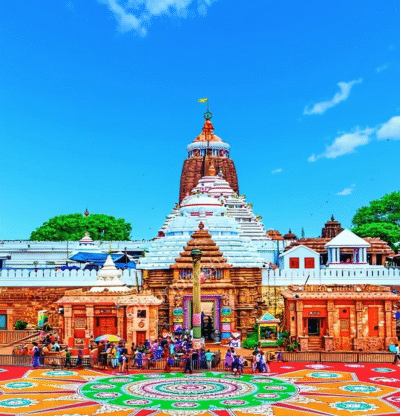
Jagannath Temple: An Architectural Marvel
The 12th-century temple sprawls over 400,000 sq. ft., rivaling the Taj Mahal’s height (200 ft).
Sacred Features
Neel Chakra: An eight-metal wheel (Vishnu’s Sudarshan Chakra) atop the temple, believed to repel lightning.
Daily flag ritual: A priest scales 200 ft to hoist a new flag.
Four ornate gates: Lion, Elephant, Horse, and Tiger entrances.
Temple Traditions
Only Hindus allowed (to preserve ritual purity).
Pilgrim tax abolished in 1840 (once a revenue source for Odisha’s kings).
The Legend of Jagannath: A King’s Quest for the Divine
Centuries ago, King Indradyumna sought Lord Vishnu’s darshan. A sage revealed Vishnu’s form as Neel Madhav, hidden in Odisha’s forests. The king sent Vidyapati, who married a tribal chief’s daughter to discover the secret.
Guided by dropped mustard seeds, Vidyapati found Neel Madhav—but the deity vanished. Heartbroken, the king received divine instruction: retrieve a sacred log from Puri’s shores. Vishwakarma, the divine architect, carved the idols but vanished when the impatient king interrupted, leaving the deities unfinished—today’s Jagannath, Balabhadra, and
Centuries ago, King Indradyumna sought Lord Vishnu’s darshan. A sage revealed Vishnu’s form as Neel Madhav, hidden in Odisha’s forests. The king sent Vidyapati, who married a tribal chief’s daughter to discover the secret.
Guided by dropped mustard seeds, Vidyapati found Neel Madhav—but the deity vanished. Heartbroken, the king received divine instruction: retrieve a sacred log from Puri’s shores. Vishwakarma, the divine architect, carved the idols but vanished when the impatient king interrupted, leaving the deities unfinished—today’s Jagannath, Balabhadra, and Subhadra.
.
Conclusion: A Festival of Unity and Faith
The Rath Yatra transcends religion—it’s a celebration of cultural unity, devotion, and timeless craftsmanship. As I depart, I carry Puri’s magic: the thunderous chants of “Jai Jagannath!”, the awe of chariots rolling, and the weight of 2,000 years of faith.
Jai Jagannath!